
Invo: Where Traders Are Made
involioSocial
3.894.00 Reviews
- Version
- 1.1.4
- Installs
- 100.00K
- Age Rating
- Teen
Screenshots
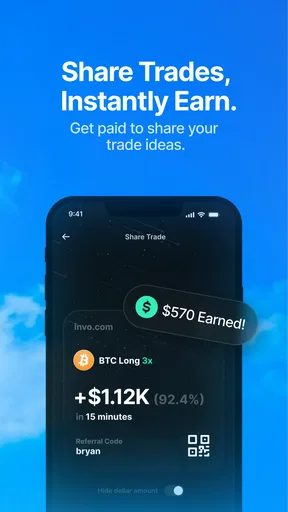
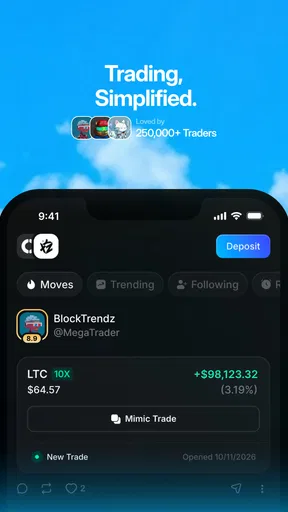
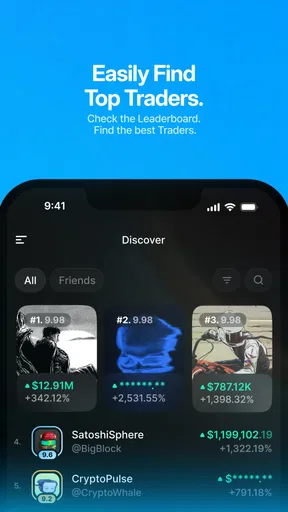
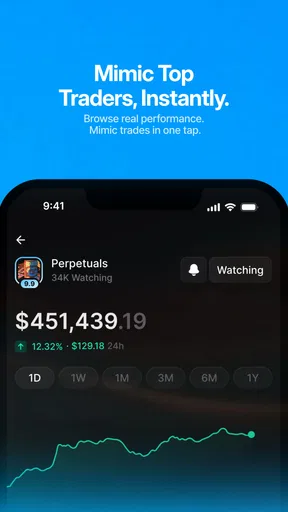
Our Review of Invo: Where Traders Are Made
 Analysis by Appyee
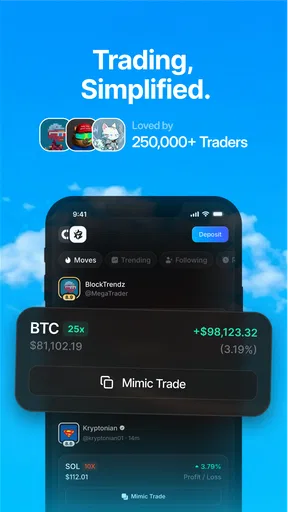
I approached Invo: Where Traders Are Made as a social app with a financial-learning angle rather than as a replacement for a brokerage account. Its central idea is easy to understand: follow the activity and thinking of other traders, then use that exposure to improve your own decisions. The concept can be useful for someone who learns best by watching examples, but it also demands caution because copying a trade is much easier than understanding why it was made.
In my experience, the app’s strongest appeal is the combination of community and market curiosity. It gives a newcomer a place to observe how other people approach trading instead of staring at a blank chart with no context. At the same time, the experience is not equally comfortable for every user. Readability, pace, financial vocabulary, and the pressure of comparing yourself with other traders all affect how approachable it feels.
How Invo works as a social trading space
Developed by involio, Invo sits in the social category and is free to use. Its public store presence shows a 4.0 average from around 677 ratings, with over 100K installs, so it has attracted a meaningful group of people without being so large that the community necessarily feels anonymous. It is rated for Teen users, and it runs on Android 7.0 or later. The current version is 1.0.59.
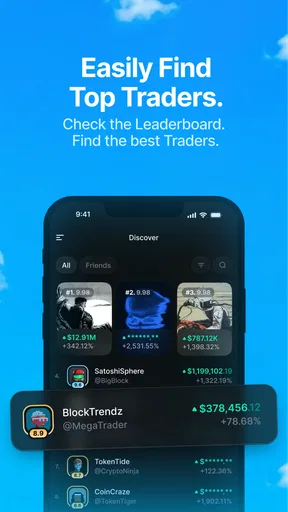
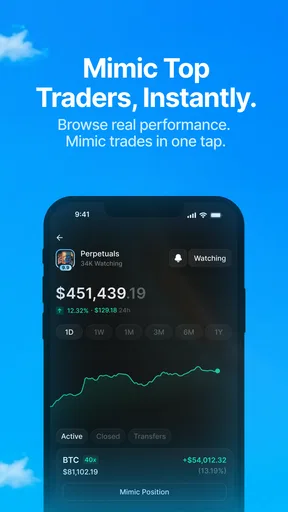
I would describe the app as a place for discovery and observation first. The promise of mimicking successful traders sounds direct, but the useful part is not simply pressing the same buttons as someone else. The real value comes from seeing patterns in how traders present ideas, make choices, and react to market movement. That distinction matters because a social feed can encourage fast imitation, while good learning usually requires slowing down and asking what makes a decision sensible.
For a beginner, that makes Invo more approachable than learning entirely alone. A person can begin by looking for traders whose explanations and habits make sense, rather than treating every visible result as proof of skill. For an experienced trader, the app may be more useful as a way to compare viewpoints or discover approaches outside their normal routine. I would not use it as my only source of research, and I would not treat a popular trader’s activity as personalized financial advice.
Readability and navigation in everyday use
The app’s social purpose gives its navigation a natural starting point: users want to find traders, inspect their activity, and decide whose approach deserves attention. That is a more understandable path than a traditional market terminal filled with technical panels. Someone who is new to trading can focus on people and decisions before learning every chart term.
Still, simplicity of purpose does not automatically mean simplicity of reading. Financial content can become dense quickly. A short post, a number, or a visible trading result may look clear while leaving out the context that would help a beginner judge it properly. I found that the most responsible way to use this kind of interface is to treat each item as a prompt for investigation, not as a complete lesson.
My practical advice is to create a small personal routine. First, read the trader’s reasoning without deciding whether to copy anything. Next, note what information appears to support the decision. Finally, compare that idea with an independent source or your own notes. This three-step habit prevents the feed from becoming a stream of impulsive instructions and makes the app more useful for people who need extra time to process information.
Users who prefer large, highly structured dashboards may find the social presentation less comfortable than a dedicated investing or charting tool. Invo is better suited to browsing ideas than to replacing a full research workspace. If you have difficulty distinguishing a discussion from an actionable recommendation, the app requires especially deliberate use.
Motor and sensory considerations
Social trading can be easier for some users because it breaks a complicated subject into individual people and decisions. A learner who struggles with long technical explanations may understand a short example more quickly than a formal guide. The ability to pause, reread, and build a shortlist of useful traders can also support users who need a slower pace.
That advantage has a limit. Financial feeds often depend on visual scanning, compact text, changing figures, and quick comparisons. Users with low vision, color-vision differences, attention difficulties, or sensitivity to busy screens should judge the app on their own device and adjust the phone’s available text and display settings where possible. I would not assume that every important distinction is communicated in a way that works equally well for every sensory need.
Motor access also deserves attention. Following a trader or reviewing several posts can involve repeated taps and scrolling. Someone with limited dexterity may find rapid feed browsing tiring, especially when the useful information is spread across multiple screens. A slower workflow helps: open one trader at a time, write down the key point, and avoid trying to compare many profiles in one sitting.
Voice control, screen readers, magnification, and system-level contrast options may improve the experience depending on the phone and operating system, but I would test the exact actions that matter before relying on the app. In particular, check whether you can identify a trader, read the relevant context, and complete an intended action without depending on color or very small interface elements. That is a more useful test than simply asking whether the app opens successfully.
There is also a cognitive accessibility issue that is easy to overlook. The idea of mimicking the best traders can create a strong sense of urgency or inadequacy. A user who is anxious about money may interpret another person’s success as pressure to act immediately. I think the app is safer and more inclusive when used as an observation journal: save the lesson, record the reason, and postpone any financial decision until the emotional reaction has passed.
Situational access: when the app fits and when it does not
Invo makes the most sense during quiet learning moments. Imagine checking it on a commute, noticing a trader’s idea, and saving the thought for later rather than acting from a crowded train. Once home, you can review the reasoning with a larger screen or a notebook. That small separation between discovery and decision is valuable because mobile use often happens while people are distracted.
It can also help someone who has limited access to formal financial education. A social environment may feel less intimidating than a textbook, and observing several approaches can reveal that traders do not all think alike. For a person returning to markets after a long break, the app can serve as a way to rebuild vocabulary and curiosity without immediately committing to a complex research setup.
On the other hand, it is a poor match for moments when attention is divided. Do not use a social trading feed while driving, working with machinery, caring for a child, or making a rushed money decision. Those situations make it too easy to misunderstand a post or act without checking the details. The app’s mobile convenience is useful only when the user has enough attention to interpret what is being shown.
It may also suit people who learn socially but frustrate people who want a complete, private, highly controlled investment workflow. A conventional educational course is better if you need a fixed sequence of lessons. A brokerage platform is better if your priority is executing and monitoring your own investments. A charting service is better if you need deep technical analysis. Invo occupies a narrower but worthwhile space between community discovery and trading education.
For users who are under financial stress, the free price removes one barrier to trying the app, but it does not remove the risks associated with trading decisions. Free access can make experimentation feel harmless even when the subject is not. I would recommend using it with a strict rule: learning activity is allowed, but no real-money action follows automatically from something seen in the feed.
Remaining barriers and practical ways around them
The biggest barrier is interpretation. A visible outcome can be more persuasive than the reasoning behind it, especially for a new user. Without careful reading, the app can become a popularity contest rather than a learning tool. I would judge traders by consistency of explanation, willingness to discuss risk, and clarity about uncertainty, not by one impressive result.
A second barrier is information overload. Even a modest community can present more opinions than a beginner can evaluate. Instead of following everyone who appears successful, choose a small group with different styles and compare them over time. This makes disagreement useful: it shows where the market is uncertain and where your own assumptions may be weak.
A third barrier is the gap between social language and financial understanding. Terms that seem obvious to experienced traders may be confusing to someone who is still learning. Keep a personal glossary, look up unfamiliar concepts outside the app, and never let embarrassment push you into an action you cannot explain in your own words. That habit is particularly important for younger users because the Teen rating does not make trading risk-free or automatically suitable for every teenager.
Privacy and comfort can matter as much as interface design in a social product. Some people enjoy public discussion; others prefer to learn quietly. If you are uncomfortable with the social side, use the app as a reading tool rather than feeling obliged to post, imitate, or compete. The best experience is not necessarily the most active one. A quiet observer can still gain useful perspective.
There is also a practical device issue. Android 7.0 support makes the app available to people using older phones, which is helpful, but an older device may make dense screens, scrolling, or multitasking less comfortable. If reading feels tiring, use shorter sessions and review important material on a device that gives you more room. Accessibility is often shaped by the combination of app, handset, display settings, and the user’s environment.
Who should try it, and who should choose something else
I would recommend Invo to a curious beginner who wants to see how traders think, a self-directed learner who enjoys comparing viewpoints, or an experienced user looking for a social layer around market ideas. It is especially suitable for someone willing to keep a notebook and separate observation from action. That extra discipline turns the app from a copying shortcut into a more thoughtful learning aid.
I would be more cautious recommending it to anyone seeking guaranteed signals, instant results, or a complete investment platform. It is also not the right first choice for a user who needs a carefully paced accessibility experience and cannot comfortably read or navigate the app on their current device. In that case, a structured course, a more adjustable research tool, or one-to-one guidance may be a better fit.
The app’s social format is both its advantage and its weakness. Compared with a brokerage app, it is more focused on people and shared ideas, but less appropriate as an all-purpose place for managing investments. Compared with a conventional course, it is more current and conversational, but less predictable and less organized. Compared with a charting platform, it is easier to approach conceptually, but not designed to replace detailed analysis.
My inclusive verdict
After using Invo as a social learning space, I see a useful idea wrapped in a format that needs mature judgment. It lowers the intimidation of entering a trading conversation by putting human activity at the center, and its free access makes exploration easier. The 4.0 average suggests a generally positive reception, while the app’s audience size indicates that it has moved beyond being an obscure experiment.
My recommendation comes with a clear condition: use Invo to study decisions, not to surrender your decisions. Read slowly, check unfamiliar terms, take breaks when the feed becomes overwhelming, and keep real-money choices separate from social excitement. For users with visual, motor, attention, or anxiety-related needs, test the complete workflow on their own phone rather than assuming that a simple concept guarantees easy access.
Invo is at its best when it gives a learner a starting point for better questions. It is less convincing when treated as an automatic route to better trades. If you want community perspective and can handle the responsibility of filtering it, I think it is worth trying. If you need a structured curriculum, advanced analysis, or a fully controlled investment workspace, another category of app will serve you better.
Ultimately, I would keep it in the toolkit of a careful learner, alongside independent research and a written plan. That approach respects both the app’s social strength and its remaining barriers, while giving different users a fair chance to benefit from what it does well.
Privacy and Permissions
See what permissions an app requests and how it handles your data.
- Contacts
- read your contacts
- Photos/Media/Files
- read the contents of your USB storage, modify or delete the contents of your USB storage
- Storage
- read the contents of your USB storage, modify or delete the contents of your USB storage
- Camera
- take pictures and videos
- Microphone
- record audio
- Other
- view network connections, full network access, change your audio settings, use accounts on the device, control vibration, prevent device from sleeping
Verdict
Strengths of Invo: Where Traders Are Made
- Clear charts and market data help beginners understand price movements.
- Practice trading lets users build confidence without risking real money.
- The interface is clean, responsive, and easy to navigate.
- Educational content supports learning beyond basic buy and sell actions.
- Community features can provide ideas and motivation from other traders.
Limitations of Invo: Where Traders Are Made
- Some advanced tools may require a paid subscription.
- Market information may not be real-time for every asset or exchange.
- Social posts can include unverified opinions and risky trading advice.
- The app may feel overwhelming if you are completely new to investing.
- Availability of features and markets can vary by country or device.
Similar Picks in This Category
View All
Meta Platforms, Inc.4.6

Instagram4.0

Likee-Live, Chat & Party Games
Likeme Pte. Ltd.4.4

Facebook Lite
Meta Platforms, Inc.4.5

TikTok - Videos, Shop & LIVE
TikTok Pte. Ltd.4.0

Moj: Free Short Drama & Reels
ShareChat4.1
Frequently Asked Questions
What is Invo: Where Traders Are Made?
Invo: Where Traders Are Made is a trading-focused mobile app designed to help users learn about financial markets, follow market activity, and develop more structured trading habits. Depending on the features available in your region and subscription plan, it may include educational material, market insights, trading ideas, community discussions, and tools for reviewing strategies. It should be treated as an educational and informational platform rather than a guaranteed way to make money.
Is Invo suitable for beginners with no trading experience?
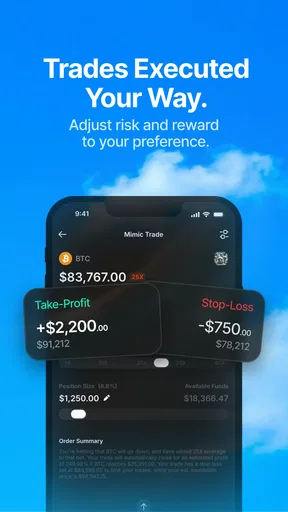
The app can be useful for beginners because it presents trading concepts, market-related information, and learning resources in a mobile-friendly format. However, new users should not assume that simply following alerts or other traders will produce consistent profits. Before risking real money, beginners should learn about leverage, volatility, fees, position sizing, and potential losses. Starting with a demo account or paper trading is generally a safer way to practice.
Can I place real trades directly through Invo?
Whether you can execute trades directly from Invo depends on the app’s current features, supported brokers, integrations, and availability in your country. Some trading platforms focus mainly on education, analysis, signals, or community content, while others connect users to brokerage services. Always check the app description and account settings carefully before depositing funds, and confirm which company actually holds your money and executes transactions.
Does Invo guarantee profitable trading results?
No legitimate trading application can guarantee profits, and Invo should not be viewed as a risk-free income solution. Market predictions, signals, educational content, and community opinions can all be wrong, especially during periods of high volatility. Your results depend on your decisions, strategy, risk management, and market conditions. Never invest money you cannot afford to lose, and be cautious of claims promising quick or guaranteed returns.
Is Invo free to download, and are there additional costs?
The app may be free to download while offering optional subscriptions, premium lessons, advanced tools, paid communities, or other in-app purchases. Trading itself can also involve separate costs such as broker commissions, spreads, platform fees, withdrawal charges, and market-data expenses. Before subscribing or connecting a financial account, review the pricing page, renewal terms, cancellation process, privacy policy, and any fees charged by third-party services.
